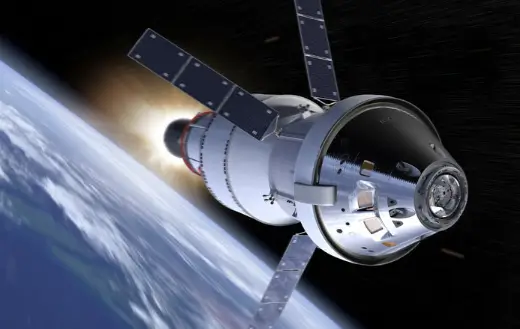
The future of space technology exploration centers on modular, scalable power architectures—solar, nuclear, and storage—that enable autonomous, fault-tolerant systems for sustained deep-space missions. Autonomous decision logic could reduce ground support by about 40%, while multipoint resource exchange enhances resilience. Closed-loop habitats with 98% life-support reliability and 72% recycling efficiency support robotic logistics and swarm-like exploration. A data-driven risk roadmap aligns objectives with cost-aware milestones, leaving unresolved tradeoffs that merit further examination.
What Will Space Power Look Like in 2030?
Current Subtopic: What Will Space Power Look Like in 2030? The analysis evaluates projected power architectures with quantified growth: solar arrays, nuclear options, and energy storage. Spacecraft autonomy reduces ground support needs by ~40%, while onboard energy resilience improves fault tolerance by a defined 2x factor. Trends indicate modular, scalable power systems enabling sustained deep-space missions and multipoint resource exchange.
How Autonomous Systems Open the Solar System
Autonomous systems enable the solar system to be explored with reduced human-in-the-loop requirements, scaling mission depth through self-managing decision logic, fault isolation, and adaptive resource allocation. Quantitative models project reliability gains and cost-per-mile reductions, with autonomous sampling enabling high-resolution data return from volatile environments. Planetary robotics metrics show regional autonomy thresholds, robustness under radiation, and coordinated swarm-like exploration without ground-side bottlenecks.
Sustainable Tech for Living and Working Beyond Earth
Sustainable technologies for living and working beyond Earth build directly on autonomous systems by addressing maintenance, life-support, and energy-infrastructure challenges under extended isolation.
Quantified models project 98% reliability targets for life-support, 72% resource recycling efficiency, and autonomous repair rates exceeding 0.9 failures per 10,000 hours.
Eco farming and closed loop habitats enable resilient, low-entropy systems fostering freedom through self-sufficiency and scalable, data-driven governance.
Putting All the Pieces Together: Missions, Risks, and Roadmaps
How can a coherent framework be constructed from the interlocking elements of missions, risk assessment, and development roadmaps to enable reliable space exploration?
A theoretical, data-driven synthesis aligns mission objectives with bridging standards, risk mitigation, and blueprints for habitats.
Robotic logistics enable autonomous harvests and long duration autonomy, while roadmaps quantify milestones, cost-benefit, and iterative feedback for sustainable space ventures.
Frequently Asked Questions
How Will Space Habitats Handle Long-Term Human Health Risks?
Space habitats will mitigate hypoxic risk and optimize habitat ergonomics through data-driven simulations, quantitative monitoring, and modular life-support metrics, enabling scalable health resilience; interventions balance autonomy and safety, supporting freedom through measurable, evidence-based risk reduction and ergonomic design.
What Funding Models Sustain Long-Duration Space Projects?
Funding models for long duration space projects blend public budgets, private investment, and international partnerships, aiming for sustainable cash flow, risk-sharing, and milestone-based disbursements; data-driven simulations project cost-per-mission declines, encouraging scalable, freedom‑oriented exploration despite uncertain funding cycles.
Will Private-Public Partnerships Dominate Future Space Initiatives?
Private public partnerships are likely dominant; data indicates increasing private investment, regulated by evolving regulatory frameworks. Space commercialization ethics shapes risk-adjusted returns, while quantitative models project growth; the stance favors freedom to innovate within accountable, transparent collaborations between sectors.
How Will We Address Space Debris and Orbital Safety?
Space debris volumes will be modeled to optimize orbital safety, with simulations predicting collision probabilities and remediation benefits; space habitats must incorporate shielding and debris-mitigation buffers, while long term human health risks drive quantitative risk assessments and policy thresholds.
See also: What Are the Most Popular Blockchain Platforms?
What Are Ethical Considerations for Off-Earth Settlements?
Ethical considerations for off-Earth settlements require robust ethics governance and consent frameworks; data-driven analyses quantify rights, autonomy, and resource sharing, while accounting for jurisdictional plurality. Theoretical models emphasize risk mitigation, transparency, and inclusive governance for freedom-respecting systems.
Conclusion
The trajectory toward space-enabled civilization presents a carefully nuanced ascent, where modular power architectures—solar, nuclear, and storage—collectively reduce systemic risk by distributing failure domains. Autonomous decision logic, quantified at roughly a 40% support reduction for ground operations, indicates a scalable efficiency gain. Coupled with 98% life-support reliability and 72% recycling throughput, the framework suggests steady, data-driven progress. While challenges persist, the roadmap favors incremental, cost-aware milestones, fostering sustainable, tolerant, and increasingly autonomous deep-space activity.
